

October 7, 2026 •Network Solutions
For years, network security was relatively easy to visualize.
The network connected users and devices. Firewalls protected the perimeter. Security products monitored what crossed that perimeter. Separate dashboards gave network and security teams visibility into their respective environments.
That model has become increasingly difficult to maintain.
Users work everywhere. Applications run across data centers, clouds and SaaS platforms. IoT devices share infrastructure with traditional endpoints. AI workloads generate new traffic patterns, and AI agents introduce machine identities capable of taking actions without waiting for a person to click a button.
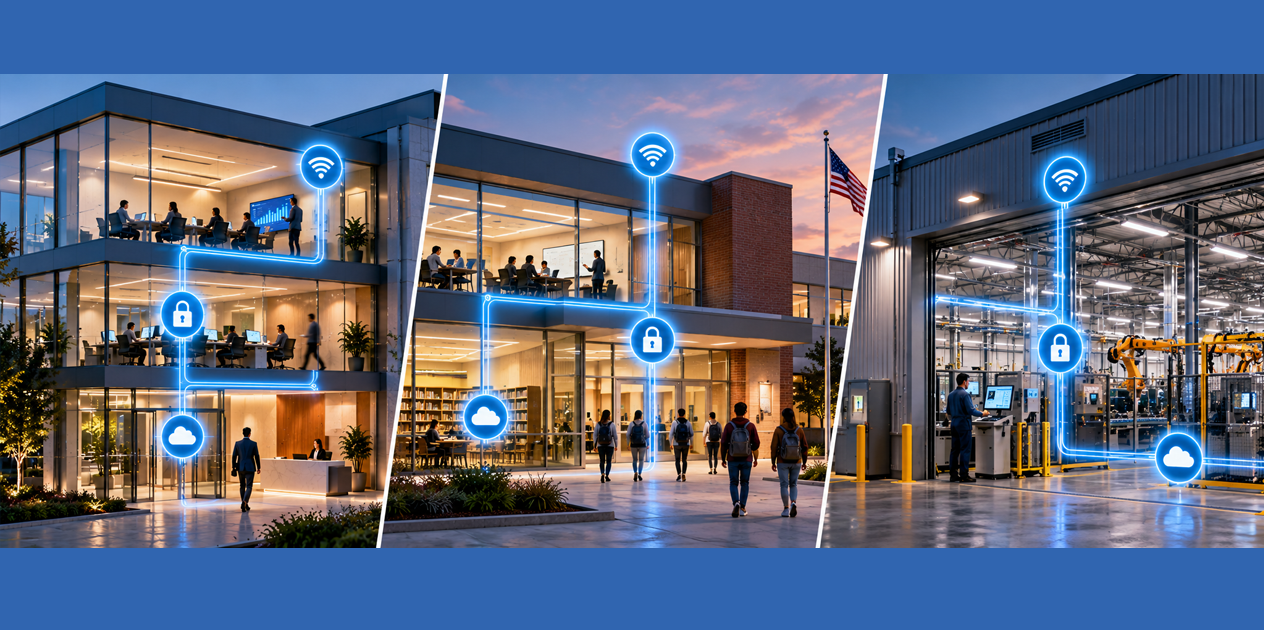
Cisco's response is an architectural shift: security is increasingly being distributed throughout the network itself.
Switches, wireless infrastructure, routers, identity services, security platforms, telemetry and AI-assisted operations can participate in a coordinated security architecture. Cisco is also bringing those systems together through Cloud Control, which provides a shared operational environment across networking, security, compute, observability and collaboration. Cisco Newsroom
The result changes the role of the network. It carries traffic, provides visibility, understands context and increasingly helps enforce security policy.
Traditional security architectures often concentrated enforcement at specific checkpoints. Traffic would travel through the network until it reached a firewall or another security appliance where a decision could be made.
Cisco is distributing more of that enforcement capability throughout the infrastructure.
One example is Cisco Hypershield. In supported data center environments, Cisco Smart Switches can provide stateful security enforcement within the network fabric. Security policy can therefore be applied closer to workloads and east-west traffic rather than depending entirely on centralized inspection points.
The broader concept is important: the network can become an enforcement fabric.
When enforcement is distributed closer to users, devices and workloads, organizations gain more opportunities to contain threats and restrict unnecessary communication before an attacker can move deeper into the environment.
An IP address tells you where traffic originated. It doesn't necessarily tell you enough about whether that traffic should be trusted.
Modern access decisions increasingly depend on context.
Who is the user? What device are they using? Is that device managed? What resources are they trying to reach? What should that user or device normally be allowed to access?
Cisco Identity Services Engine (ISE), Duo, Secure Access and segmentation technologies help bring that context into access and policy decisions.
Consider a compromised laptop.
Simply connecting successfully to the corporate network shouldn't automatically provide broad access to everything reachable from that network. Identity and device context can help determine what that endpoint should be permitted to communicate with, while segmentation can limit unnecessary access.
That can significantly reduce the opportunity for lateral movement after an attacker gets inside.
The objective is straightforward: connectivity should not automatically equal trust.
Distributed security creates another challenge: management.
Adding enforcement points doesn't help if every system requires completely independent policies, workflows and dashboards.
Cisco is addressing that problem through Security Cloud Control and the broader Cisco Cloud Control platform.
Security Cloud Control centralizes management across technologies including Secure Firewall, Multicloud Defense, Hypershield, Secure Workload, Secure Access, Secure Router and AI Defense. Cisco's current approach is increasingly centered around defining security intent centrally and applying it across appropriate enforcement points. Team Development
That can reduce duplicated policies and configuration drift while giving teams a more consistent view of security across distributed environments.
Cisco Cloud Control expands that idea beyond security. It brings networking, security, compute, observability and collaboration into a common operational environment where people and AI agents can work from shared context. Cisco Newsroom
For IT teams accustomed to jumping among management consoles, alerts and separate sources of telemetry, that shared context may be just as valuable as another security feature.
AI introduces new security risks, but it also gives IT teams a way to manage complexity that has exceeded what humans can reasonably correlate manually.
Cisco calls its approach AgenticOps.
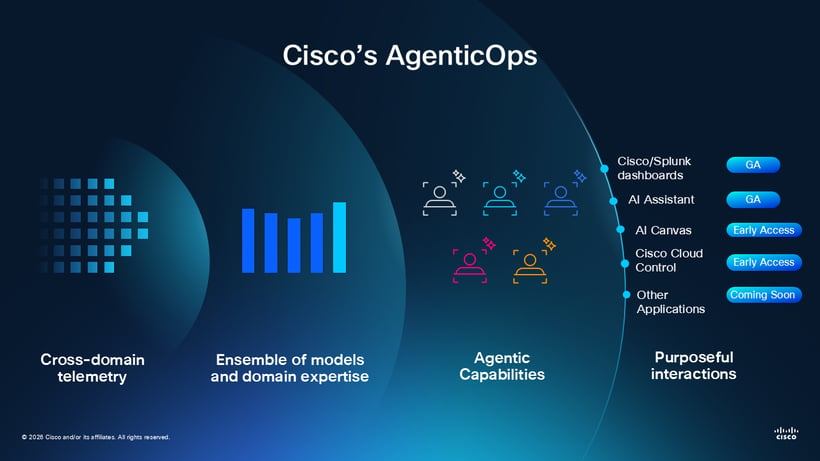
Instead of AI simply producing another alert or dashboard, Cisco is developing AI agents that can correlate telemetry, investigate issues, identify likely causes, recommend actions and, where appropriate, execute approved workflows while maintaining human oversight. Cisco Blogs
Security Cloud Control already includes AgenticOps capabilities. For example, its Policy Change Impact Analyzer can evaluate proposed firewall policy changes against devices, rules, traffic segments and historical activity before those changes are deployed. The system can identify potential security exposure, service disruption or unintended expansion of access. Cisco
That represents an important progression.
Security operations have historically been reactive: something happens, an alert appears, someone investigates and then someone decides what to do.
AI-assisted operations can increasingly help connect those steps.
The goal isn't removing experienced engineers from security decisions. It's giving them better context, faster analysis and automation for work that otherwise consumes valuable time.
For customers, the value isn't having more Cisco products. It's what becomes possible when the infrastructure works together.
Security enforcement can happen closer to users, devices and workloads. Identity and device context can influence access decisions. Segmentation can help limit lateral movement. Centralized policy can reduce configuration inconsistencies. Network and security teams can work from more of the same operational context.
AI can then analyze telemetry across those systems, helping teams identify problems faster, prioritize risk and respond with greater confidence.
Cisco describes Security Cloud Control around the idea of defining policy once and enforcing it where needed. That's a useful way to think about the larger architecture as well. Cisco
The objective is a security model that follows the infrastructure instead of being concentrated around a few places in it.
For years, organizations built networks and then added security around them.
That distinction is becoming much less meaningful.
A switch can participate in enforcement. Identity can determine access. The network can provide segmentation. Security platforms can coordinate policies across environments. Observability can provide additional context. AI can help operators understand what's happening across all of it.
At Network Solutions, we believe this convergence makes architecture more important, not less.
NSI works across Cisco networking, cybersecurity, data center infrastructure, collaboration and observability because those disciplines increasingly depend on one another. Designing them together allows organizations to consider connectivity, identity, segmentation, visibility, enforcement and operations as parts of the same system.
If you're evaluating how well your current network and security architecture work together, complete the form below to start a conversation with Network Solutions.