

July 2, 2026 •Network Solutions
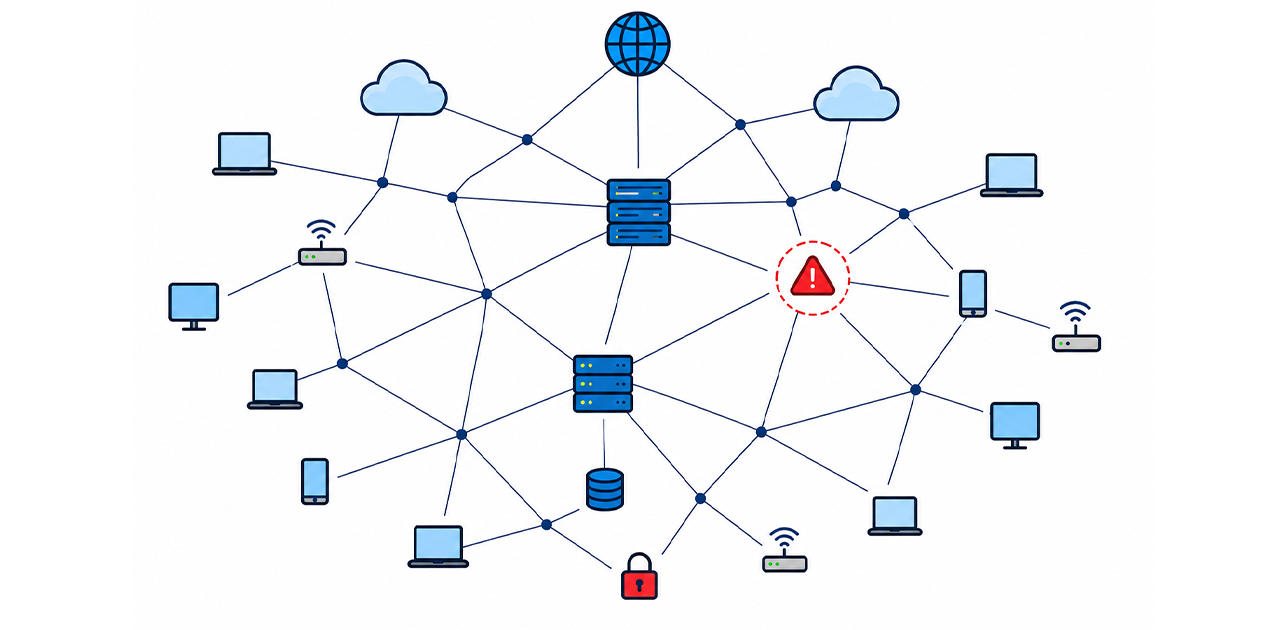
XDR stands for extended detection and response. The term describes a category of security software that pulls telemetry from multiple types of controls — network devices, endpoints, cloud workloads, email, identity systems — into one place and correlates it.
This is different from two things people often confuse it with:
Cisco XDR is Cisco's implementation of this category. Its main technical advantage, relative to XDR platforms built by vendors without a broad product portfolio, is that it ingests data natively from Cisco's own security products:
Because these products already emit telemetry in formats Cisco controls, XDR can ingest and normalize that data without custom parsers or per-source connector licensing. An organization already running several of these products gets cross-domain visibility with comparatively little integration work.
Data from outside the Cisco portfolio works differently. Third-party integrations — with other EDR vendors, cloud security posture tools, or SIEMs — are available through the Advantage license tier. These integrations are curated by Cisco rather than open-ended: the list of supported third-party sources is fixed at any given time, and bringing in a tool not on that list requires custom work outside the standard product.
Individual security events often look unremarkable on their own. Consider a sequence like this:
Reviewed separately, in three different consoles, each of these might sit in a queue as a low-priority alert. Cisco XDR's correlation engine links them into a single incident when the underlying activity connects — in this case, a phishing email that delivered a payload, which contacted a newly registered command-and-control domain, followed by execution on the endpoint. The platform's incident view shows this as one connected timeline rather than three disconnected tickets.
Incidents are also scored and prioritized using threat intelligence from Cisco Talos, Cisco's threat research group. This scoring is meant to reduce the manual triage needed to figure out which alerts deserve immediate attention. The platform also maps observed activity to the MITRE ATT&CK framework, giving analysts a standard reference for what stage of an attack a given incident represents.
Data retention under the default configuration is 90 days. Organizations with longer compliance retention requirements need to upgrade retention or export data to a separate long-term store — 90 days is a platform default, not a regulatory limit.
Cisco XDR does not replace the underlying security controls. It does not detect malware the way an EDR agent does, and it does not inspect network traffic the way a firewall does. It sits above those tools, consuming their output and adding cross-domain context that no single tool has on its own. Whether that context is useful in practice depends on how many of the data sources feeding it are already deployed — a question of existing infrastructure more than of the XDR product itself.
How that correlated data actually gets used day to day, by the people running a security operations center, is a separate question — one that depends less on architecture and more on workflow.