

January 30, 2026 •Jason Dell
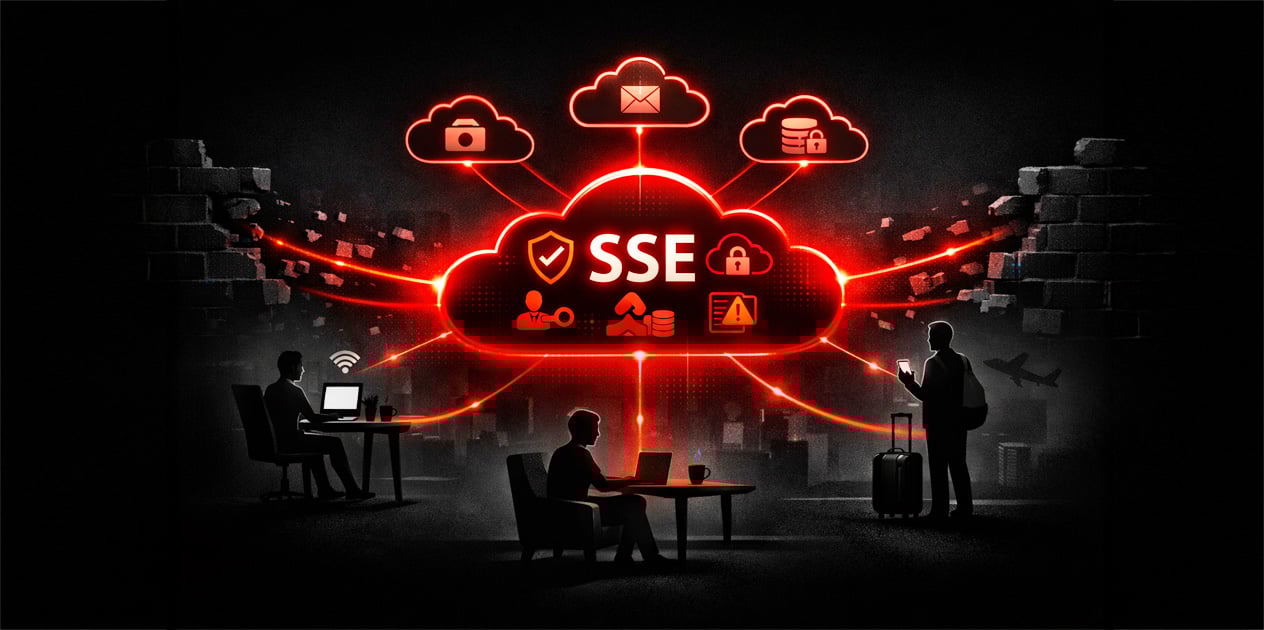
As enterprises continue to move workloads to the cloud and support a distributed workforce, traditional network security models are showing their age. The perimeter is gone, users are everywhere, and applications live far beyond the data center. Enter Secure Services Edge (SSE)—a modern security framework designed for how organizations actually operate today.
If you’re responsible for security architecture, network design, or risk management, SSE isn’t just another acronym—it’s a strategic shift.
What Is Secure Services Edge (SSE)?
Secure Services Edge (SSE) is the security-focused subset of SASE (Secure Access Service Edge). While SASE combines networking and security into a unified cloud-delivered model, SSE zeroes in specifically on security services delivered at the edge.
At its core, SSE typically includes:
All of these services are delivered via the cloud, close to the user, rather than backhauling traffic to a central data center.
Why SSE Matters in Modern Environments
Users access applications from anywhere—home offices, coffee shops, airports—using unmanaged or semi-managed devices. SSE enforces security based on identity, device posture, and context, not IP addresses.
Traditional security tools struggle to see or control SaaS usage. SSE provides deep visibility and policy enforcement across sanctioned and unsanctioned cloud applications.
Legacy VPNs offer broad network access and create lateral movement risk. ZTNA, a core SSE component, provides least-privileged, application-level access, reducing attack surfaces.
Technical Benefits (That Translate to Business Outcomes)
|
Technical Capability |
Business Outcome |
|
Zero Trust access controls |
Reduced breach impact and faster incident containment |
|
Cloud-delivered security |
Lower infrastructure and operational costs |
|
Unified policy enforcement |
Simplified security operations and governance |
|
Inline threat prevention |
Reduced downtime and productivity loss |
|
Better SaaS visibility |
Improved compliance and risk management |
In short, SSE helps organizations do more with less—less complexity, less risk, and fewer point solutions.
SSE vs. Traditional Security: A Strategic Shift
Traditional security stacks are built around appliances, static rules, and implicit trust. SSE flips that model:
For security leaders, this means aligning security strategy with digital transformation, cloud migration, and hybrid work initiatives—not fighting against them.
Is SSE Right for You?
SSE is particularly well-suited for organizations that:
Final Thoughts
Secure Services Edge is not just a new architecture—it’s a practical response to modern risk. By bringing security closer to users and applications, SSE enables stronger protection while improving user experience and operational efficiency.
If you’re evaluating SSE or wondering how it fits into your existing security roadmap, expert guidance can make the difference between shelfware and real outcomes.
Contact us today for a free consultation to assess your current environment, identify gaps, and determine whether SSE is the right next step for your organization.
