

June 9, 2026 •Network Solutions
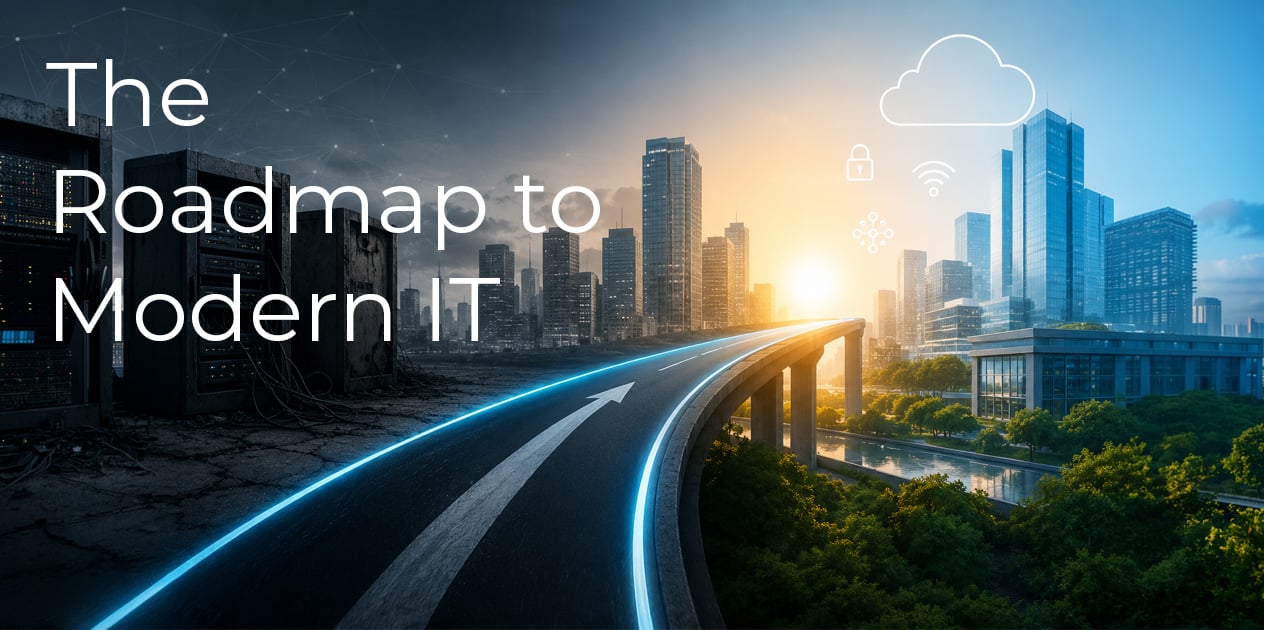
When organizations begin discussing IT modernization, many leaders immediately assume it means a complete technology overhaul. New servers, new networking equipment, new security platforms, new cloud services—essentially a rip-and-replace project with a massive budget attached.
The reality is quite different.
Most successful modernization initiatives happen incrementally. They are carefully planned journeys that prioritize business outcomes, reduce risk, and maximize the value of existing investments. Organizations that attempt to replace everything at once often face higher costs, greater disruption, and increased operational risk.
The most effective modernization strategies focus on evolving infrastructure over time rather than rebuilding it overnight.
The Myth of the Complete Refresh
Technology vendors often promote modernization as a clean slate opportunity. While that approach may work for some organizations, it is rarely practical for mid-sized businesses operating with limited budgets, lean IT teams, and mission-critical systems that cannot tolerate extended downtime.
Many organizations still have infrastructure components that continue to deliver value, including:
Replacing functioning systems simply because they are not brand new is rarely a sound business decision.
Instead, modernization should focus on identifying where technology is creating operational risk, limiting growth, increasing costs, or impacting security.
Start With Business Drivers, Not Technology
One of the biggest mistakes organizations make is beginning modernization discussions with products rather than objectives.
Questions such as:
often come too early in the process.
A better starting point is understanding the business challenges that need to be solved.
For example:
Technology decisions become much clearer once business goals are established.
Identify the Highest-Risk Components First
Not every part of the environment requires immediate attention.
Successful modernization projects often begin by addressing infrastructure components that create the greatest operational risk.
Common examples include:
End-of-Life Hardware
Manufacturers eventually stop supporting servers, switches, storage platforms, and security appliances. Once hardware reaches end-of-support status, organizations face increased risks related to security vulnerabilities, replacement parts availability, and vendor support limitations.
Aging Virtualization Platforms
Recent changes in the virtualization market have caused many organizations to reevaluate long-term platform strategies. Infrastructure modernization may include transitioning to new virtualization solutions while maintaining existing workloads throughout the process.
Security Gaps
Cybersecurity requirements continue to evolve. Organizations frequently discover that legacy infrastructure cannot support modern security capabilities such as zero trust architectures, advanced threat detection, or enhanced identity management.
Network Performance Bottlenecks
As cloud adoption, collaboration platforms, and AI-powered applications increase, older network designs may struggle to provide the performance users expect.
By prioritizing high-risk areas first, organizations can improve stability and security while spreading investments over multiple budget cycles.
Build a Roadmap Instead of a Project
Modernization is rarely a single project.
It is a roadmap.
Organizations that achieve the best outcomes typically develop multi-year modernization plans that include clearly defined phases.
A typical roadmap might include:
Phase 1: Assessment and Planning
Phase 2: Critical Infrastructure Updates
Phase 3: Platform Modernization
Phase 4: Operational Optimization
Breaking modernization into manageable phases reduces disruption while creating measurable progress.
Hybrid Environments Are the New Normal
Many organizations assume modernization requires moving everything to the cloud.
In reality, hybrid environments have become the preferred model for many businesses.
Some workloads perform best on-premises. Others benefit from cloud scalability and flexibility. Modernization often involves finding the right balance rather than choosing one environment exclusively.
Successful organizations evaluate workloads individually and determine where each application delivers the best combination of performance, security, cost efficiency, and operational simplicity.
Modernization is no longer about choosing between on-premises and cloud. It is about building an architecture that leverages both effectively.
Don't Overlook Operational Readiness
Technology upgrades alone do not guarantee successful modernization.
Processes, documentation, monitoring, security controls, and staff readiness must evolve alongside infrastructure changes.
Organizations should ensure they have:
Without operational readiness, even the most advanced technology investments can fail to deliver expected results.
Modernization Is a Journey, Not a Destination
The most successful IT leaders understand that modernization is not a one-time event.
Technology, security threats, business requirements, and user expectations will continue to evolve. Organizations that view modernization as an ongoing process rather than a major project are often better positioned to adapt to future changes.
The goal is not to replace everything at once.
The goal is to build a practical roadmap that reduces risk, improves performance, strengthens security, and aligns technology investments with business objectives.
Organizations that take this approach can modernize confidently, control costs, and avoid the disruption that often accompanies large-scale infrastructure transformations.